 SE / SEK








 Order Status
 Return Status
 Frequently Asked Questions


How to Choose the Right Size of Kids’ Barefoot Shoes
 Be Lenka
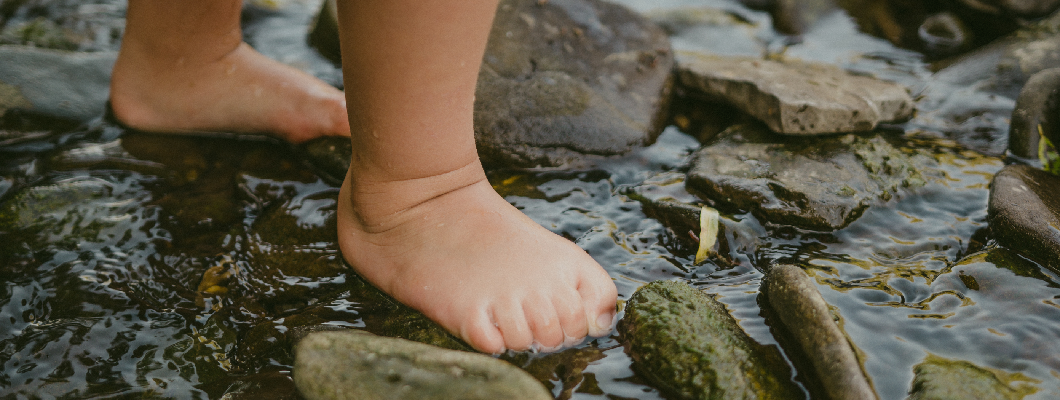
Children’s feet grow quickly and are highly sensitive to pressure. Choosing the right size of kids’ barefoot shoes is essential for comfort and healthy foot development. In this guide, we’ll show you how to measure your child’s foot correctly, how much toe allowance to add, and how to choose the right size so the shoes fit naturally and without restriction.
In this article
- What happens to a child’s foot in poorly fitting shoes
- How to measure a child’s foot correctly
- How much toe allowance should you add
- Which kids’ shoe size should you choose according to the size chart
- What should you consider when choosing the right size
- Where can you find a reliable size chart and support
- Which versatile Be Lenka barefoot shoes are ideal for spring and summer
- Why barefoot shoes support natural foot development

What Happens to a Child’s Foot in Poorly Fitting Shoes?
The bones in a child’s foot develop gradually and react sensitively to external pressure. If a shoe is too small or too narrow, it can press on the toes, restrict natural movement, and weaken the muscles of the foot. It is also important to remember that children often do not realize when shoes feel uncomfortable. Their nervous system is still developing and they may not be able to identify or describe pressure inside the shoe.
Recent studies highlight a link between poorly fitting footwear and toe deformities as well as changes in posture. This is why choosing the correct shoe size is crucial from the very first steps.
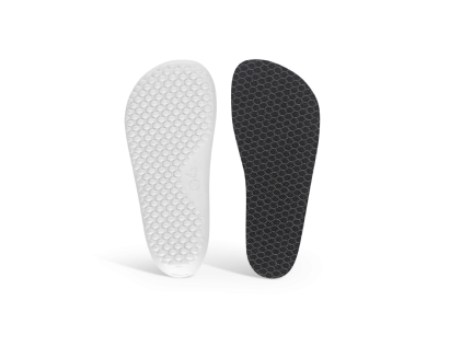
Barefoot shoes respect the natural shape of the foot because they feature:
- wide toe box
- thin, flexible sole
- zero heel to toe drop
This design allows foot muscles to work naturally, much like walking barefoot.
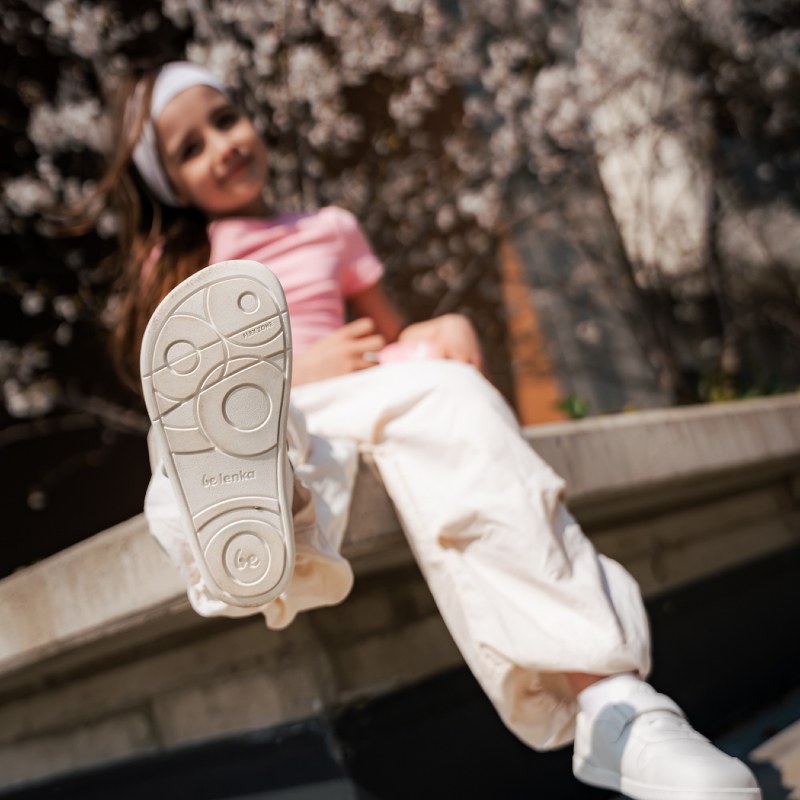
How to Measure Your Child’s Foot Correctly
- Have your child stand barefoot on a firm surface, ideally the floor
- Place a sheet of paper under each foot
- Trace both feet with a pencil
- Measure the longest distance from the heel to the longest toe
- Measure both feet. The difference can be up to 5 mm
- Add the recommended toe allowance depending on the type of footwear
- Choose the shoe size according to the larger foot
Practical tips
- Measure feet in the afternoon, when they are naturally slightly larger
- The child should be standing, not sitting
- Pay attention to the width of the foot as well
- Repeat the measurement every 2 to 3 months
How Much Toe Allowance Should You Add?
Toe allowance is the extra space inside the shoe that allows the foot to grow and move naturally while walking.
Type of footwear |
Recommended toe allowance |
Sneakers for spring and autumn |
10 to 12 mm |
Sandals |
about 10 mm |
Winter shoes |
12 to 15 mm |
Example for a clearer picture: if the foot measures 17 cm and you add 1 cm of toe allowance, you should look for shoes with an internal length of 18 cm. It is also important that the shoe is not excessively large. Shoes that are too big can cause tripping and instability.
Which Kids’ Shoe Size Should You Choose According to the Size Chart?
Always compare the size chart with the specific model. Different kids’ barefoot shoes can vary slightly in internal width. Size charts are available with every children’s model. For example, you can check the size chart for our popular Scoot model.
What Should You Consider When Choosing the Right Size?
When selecting the correct size, do not rely only on the number shown in the size chart. Every foot is unique. Some children have wider toes, a narrower heel, a higher instep, or a more pronounced arch. These natural differences influence how well a shoe will truly fit. The size chart lists the internal length and width of the shoe. This represents the actual space inside the model, not the insole length or the EU size label.
For children’s shoes, we recommend adding a toe allowance of about 0.5 cm to the measured foot length. This ensures enough space for natural toe movement and foot growth while also preventing the shoe from being too large and unstable.
Where Can You Find a Reliable Size Chart and Support?
You can find a reliable size chart directly on each product page on our website. When choosing a size, pay attention to both the internal length and width. If you are unsure, contact our customer support team. They will help you choose the right kids’ shoe size based on your measurements.
Which Versatile Be Lenka Barefoot Shoes Are Ideal for Spring and Summer?
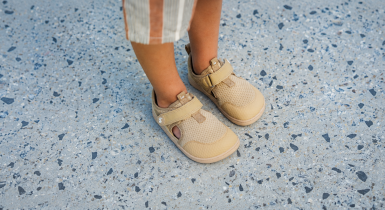
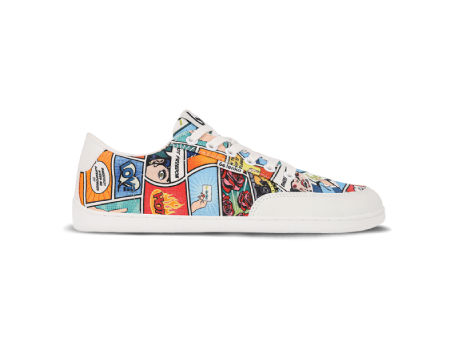
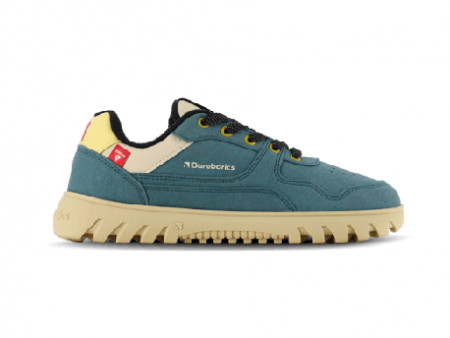
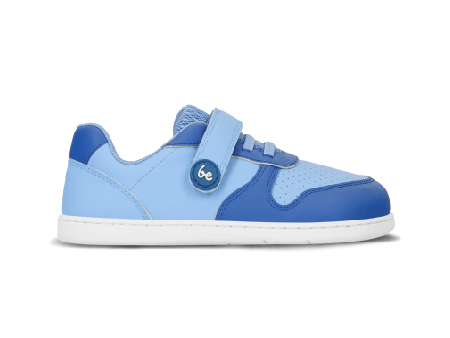
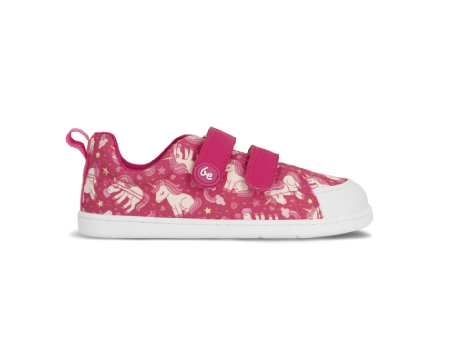
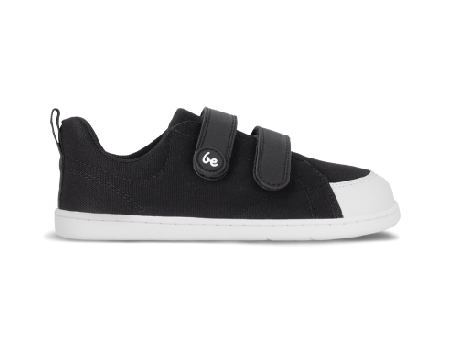
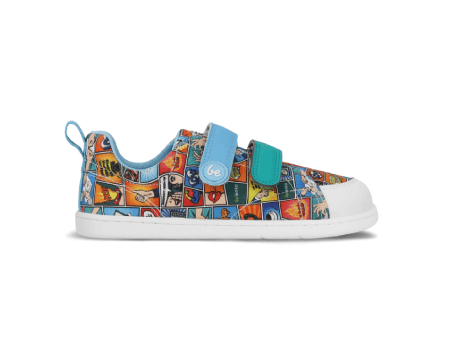
When choosing sneakers for spring and summer, parents usually look for lightweight construction, breathability, and enough space for growing feet. The playful Canvi sneakers naturally meet these requirements. Thanks to the textile upper, they remain breathable even on warmer days. The soft and flexible sole supports natural movement during running and walking, while the wide toe box gives the toes plenty of room without restriction. Their low weight helps reduce foot fatigue, which children appreciate during long days at school, on the playground, or on family outings. A practical hook and loop closure also allows kids to put their sneakers on by themselves.
Why Barefoot Shoes Support Natural Development
Modern studies confirm that flexible footwear supports natural activation of the foot muscles and improves stability. A thin sole also provides sensory feedback that is important for balance and coordination.
The correct size of barefoot shoes allows:
- natural weight distribution
- active toe movement
- healthy growth without deformities
- improved posture
Choosing the correct size of kids’ barefoot shoes is the foundation of healthy foot development. Once you understand how to measure the foot accurately, how toe allowance works, and how to use size charts, it becomes much easier to avoid common mistakes. Your child can then run, play, and explore comfortably, naturally, and without restriction.
Sources
- Wang, Y. et al. (2023). Understanding the Role of Children’s Footwear on Children’s Feet and Gait Development: A Systematic Scoping Review
- Puszczalowska Lizis, E. (2020). Influence of footwear fitting on feet morphology in 9 year old girls
How often should a child’s foot be measured?
+ -Children’s feet should be measured every 2 to 3 months because growth is rapid and uneven.
What if one foot is larger?
+ -Always choose the size of barefoot shoes according to the larger foot.
How much space should there be in front of the toes?
+ -Approximately 8 to 15 mm depending on the type of footwear.
Can shoes be larger so a child can wear them longer?
+ -It is not recommended to buy shoes that are too large. Oversized footwear can cause instability and poor posture.
Do you think others should know about this too?
Share it :)